Boffa Miskell played a central role in shaping Māra Hūpara Ōtāhuhu as a culturally led, values‑based project. Working closely with the Tūpuna Maunga Authority, Ngā Mana Whenua and traditional play specialist Harko Brown, Boffa Miskell provided landscape architecture leadership, cultural design integration, and facilitation across all stages of the project.
Ōtāhuhu | Mount Richmond holds a powerful cultural whakapapa and historical role as a fortified pā site and a key portage connecting the Waitematā and Manukau harbours, linking the Pacific Ocean and the Tasman Sea. This context fundamentally shaped all aspects of the project.
Governance and decision‑making for the Maunga are given effect through the Tūpuna Maunga Integrated Management Plan (IMP), developed through co‑governance with Ngā Mana Whenua. The IMP identifies Mana Whai a Rēhia / Recreational as a core value guiding how recreation is planned and delivered on the Tūpuna Maunga.
The project team undertook a hīkoi of the Maunga to understand the pūrākau and history of the maunga and existing site conditions. This led to a collective understanding of the different layers relating to the site and opened discussions about ideas and approaches for the Maunga.
In the subsequent wānanga, the team tested some potential themes for the site, along with multiple options for interpretation. The project was deliberately split into two stages:
Stage 1 – Neighbourhood Playspace
Focused on the reinstatement of the small playground footprint, delivering immediate benefit to the community while embedding cultural values and shared narratives.
Stage 2 – Wider Maunga Engagement (Future)
Planned to commence in late 2026, Stage 2 will consider the whole Maunga and engage with the wider community, including local kura and early childhood education facilities.
The final concept and play equipment were selected through multiple hui, reflecting collective decision‑making and Ngā Mana Whenua leadership. Play elements have been chosen with deliberation to weave a narrative, supported by timber, rocks and planting, that connect the past, present and future, and invite the community into a deeper relationship with their maunga.
Seesaw: The single seesaw is the representation of the vital portage between oceans, speaking to seafaring waka and the transfer of mātauranga, people, and goods between harbours.
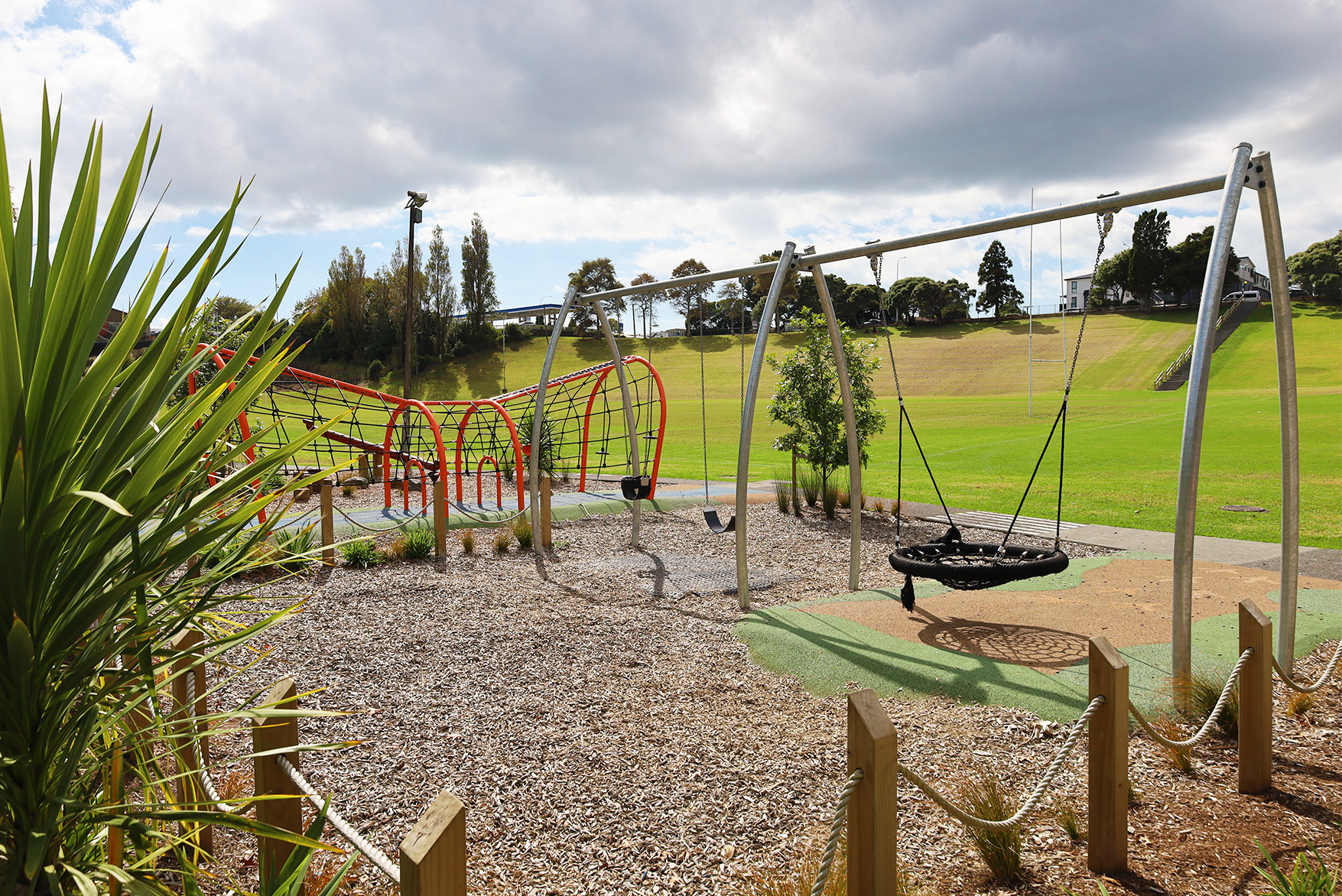
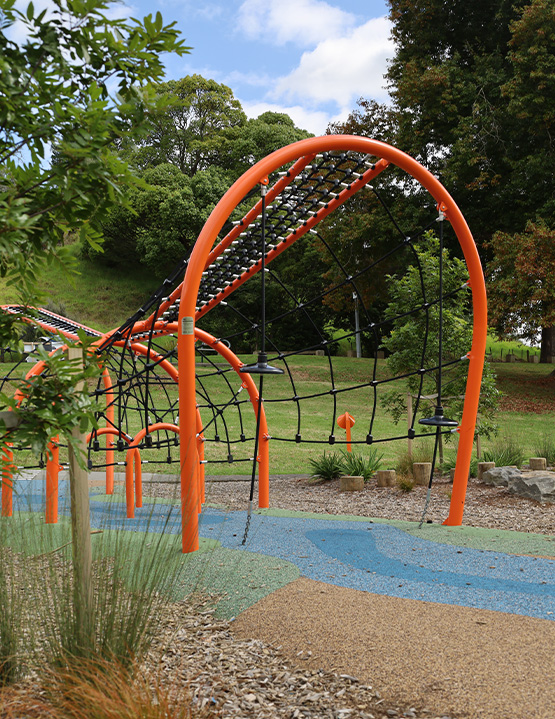
Hīnaki Climber: The hīnaki climber represents mahinga kai and traditional harvesting, referencing the bounty once gathered from the reporepo | swamp within the crater. It has been adapted to allow for all-abilities play at ground level, while confident climbers can reach the top and observe sports activity across the field.
Swings: These represent manu and flight – both physical and metaphysical through space and time. A basket swing has been included to provide accessible play where none previously existed.
Play graphics reference native fauna, with tuna swarming toward the hīnaki and pūkeko footprints streaking past the swings, while ecological planting references both reporepo and maunga environments.
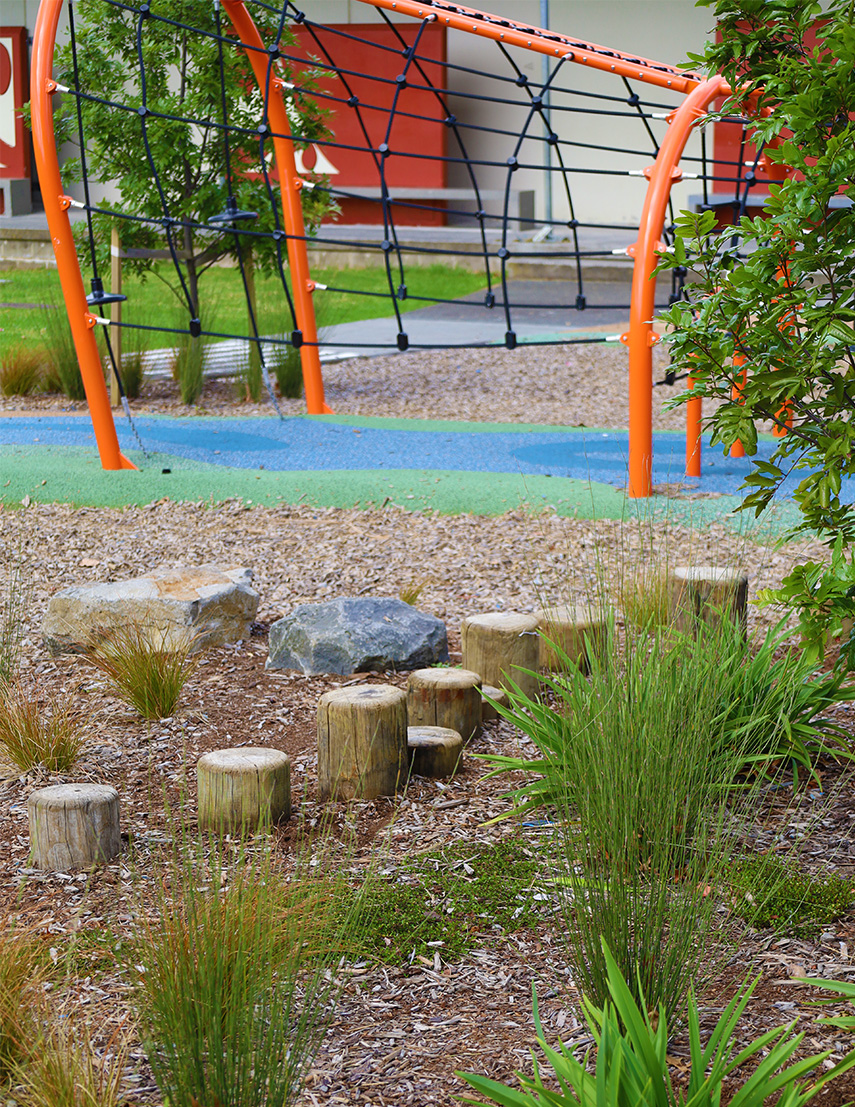
All play equipment was locally manufactured within 25km of site, all plant materials were sourced from local nurseries within the same radius. Basalt traditionally quarried from the Maunga has been returned to site as informal trails and seating, and a small hūpara trail has been created to signal future expansion in Stage 2.
Stage 1 has delivered a low‑cost, locally delivered neighbourhood playspace renewal that sits lightly in the landscape. The project has been effective in giving life to the Integrated Management Plan, Values and Strategies that underpin all activities that occur on a Tūpuna Maunga.
Though modest in scale, the completed Māra Hūpara carries a deep cultural narrative, reconnecting people with place through play that is inspired by pūrākau, ecology, traditional activities, and the volcanic landscape. The playspace is well-used by rugby league families and the wider community, particularly in this area where open space and play opportunities are limited.