Identifying a realistic and culturally aligned pathway for long-term, large-scale predator management.

Māhia Peninsula is a landscape of high biodiversity and deep cultural significance, with ecological, social, and cultural values that are vulnerable to predation from mustelids and rats. These predators are a significant threat to threatened and at-risk species.

To assess the viability of suppressing or eliminating mustelids and rats from across 14,600ha of the peninsula, Boffa Miskell provided a comprehensive analysis that builds on the near-complete possum eradication already achieved through the Whakatipu Māhia – Predator Free Māhia programme. The feasibility analysis examined three predator management options, providing a pathway for Rongomaiwahine Iwi Trust toward their long-term aspiration for a predator-free peninsula.
Location

Hawke's Bay

Project team

Kane McElrea
Hannah Cole

Worked with

Department of Conservation
Hawkes Bay Regional Council
Native Forest Restoration Trust
Whangawehi Catchment Group

Project date

2022 - 2023

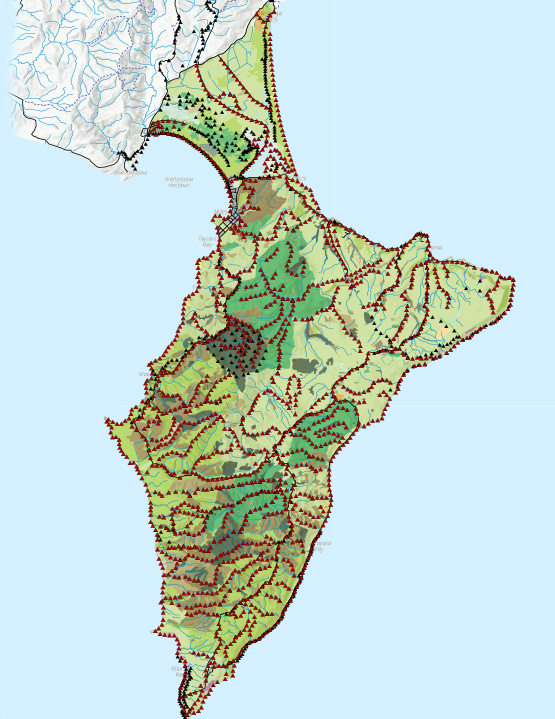
Map displaying option 2.

Management Options Assessed

  1. Maintaining the status quo.
  2. Targeting ongoing suppression of mustelids and rats.
  3. Elimination of mustelids from Māhia Peninsula.

Our analysis required ecological assessment, GIS mapping, technology review, cost modelling, operational planning considerations, and implementation recommendations. The study covered required device densities, monitoring systems, ecological risks, and operational costs and integrates emerging technologies such as AI cameras, resetting traps, and new toxins.

Variable habitat types, reinvasion pressures, limited rat control to date, and the labour demands of large‑scale operations are addressed through detailed modelling of trap networks, assessment of reinvasion barriers, identification of priority ecological zones, and a staged implementation approach designed to build local capability and workforce capacity over time.

Based on our analysis, we recommend a landscape-scale predator suppression programme (option 2), or at least part of it, to maximise biodiversity gains while remaining achievable and scalable.

A landscape-scale predator suppression programme will provide significant protection to threatened and at-risk species, protect and maintain biodiversity values, provide opportunities for potential species reintroductions, and create employment opportunities.